How Proportion Rules Change for Tall Women After Fifty
Quick Answer: Three rules change. Breaking up height stops being the goal - vertical continuity now reads as elegance rather than as too much. Fabric weight matters more than cut, because drape does the work that structure used to. And the waist marker moves: a defined waist at the narrowest point beats a fixed high-rise rule, since that point may have shifted. The single most useful update is going up in fabric weight rather than up in size when something no longer hangs right.
The rules did not become wrong. The problem they were solving changed.
Which old rules should you actually drop?
Three of them, and dropping the first one changes the most.
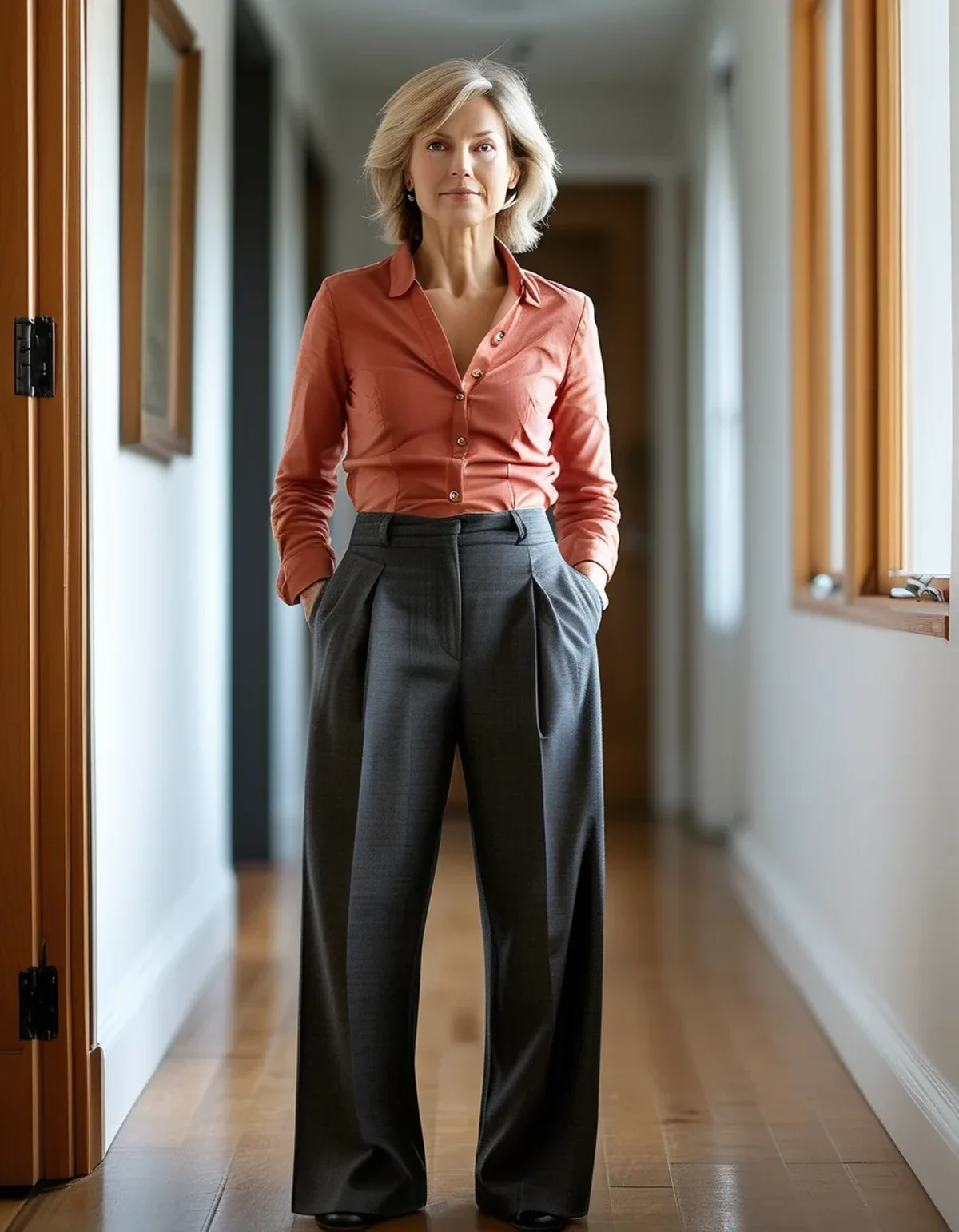
Drop breaking up your height. The classic tall advice - contrasting top and bottom, belts, horizontal detail - was aimed at making height less conspicuous. After fifty, an unbroken vertical line reads as poise, and chopping it into segments tends to read as busy rather than as balanced.
Drop always show the waist with a belt. A belt marks the waist only if the fabric above it can blouse. On the heavier fabrics that work best now, a belt creates a hard horizontal with bulk above it. A defined seam, a wrap, or a semi-fitted cut does the job with none of the bulk.
Drop small prints are safer. Small busy prints get lost on a longer frame and can read as fussy. Larger-scale prints and clean colour blocking are proportionally correct for a tall frame at any age, and they look more deliberate.
Keep one old rule, though: know your inseam and sleeve measurements in centimetres and shop by them. This never stops being the highest-leverage thing a tall woman can do, and it matters more as ranges get less consistent.
The underlying shift is from managing height to using it. Height is a proportional advantage in almost every garment that relies on drape - which is most of the ones that suit this stage.
Why does fabric weight matter more than it used to?
Because drape replaces structure as the thing making a garment look good.
Lightweight fabric clings and shows every underlying line. On a longer frame there is simply more surface for it to cling across, so the effect is amplified.
Heavier fabric falls away from the body. Ponte, heavyweight jersey, wool crepe, thick cotton twill, denim above about 10oz. These skim rather than cling, and they hold a line down a long leg or a long torso in a way lighter cloth cannot.
This is why sizing up rarely fixes the problem. A thin fabric in a larger size is still thin fabric - it now clings from further away and adds volume. Going up in weight at the same size fixes what sizing up does not.
Structure through fabric beats structure through construction. Darts, seams, and linings can build shape into a light fabric, but a well-chosen heavy fabric does it passively, which is more comfortable and more forgiving across a day.
Practical test in a shop: hold the garment by the shoulders and let it hang. If it collapses into vertical creases immediately, it is too light. If it falls in smooth columns, it will do the same on you.
Autumn makes this easy. The season’s fabrics are exactly the weights that work: wool blends, ponte, heavier knits, and structured denim are all in the shops right now, and they are the ones worth buying in the good version.
Where does the waist marker go now?
At your actual narrowest point, which may not be where the rise of a garment assumes.
Body shape commonly changes through midlife, including around the waist, and the narrowest point can sit higher than the natural waist you are used to. A rise that was perfect at thirty-five may now sit below the narrowest point, which is the least flattering position available.
Test it rather than assuming. Tie a length of ribbon around your torso and let it settle where it wants to sit while you move. Wherever it settles is your current waist, and it is the number to shop against.
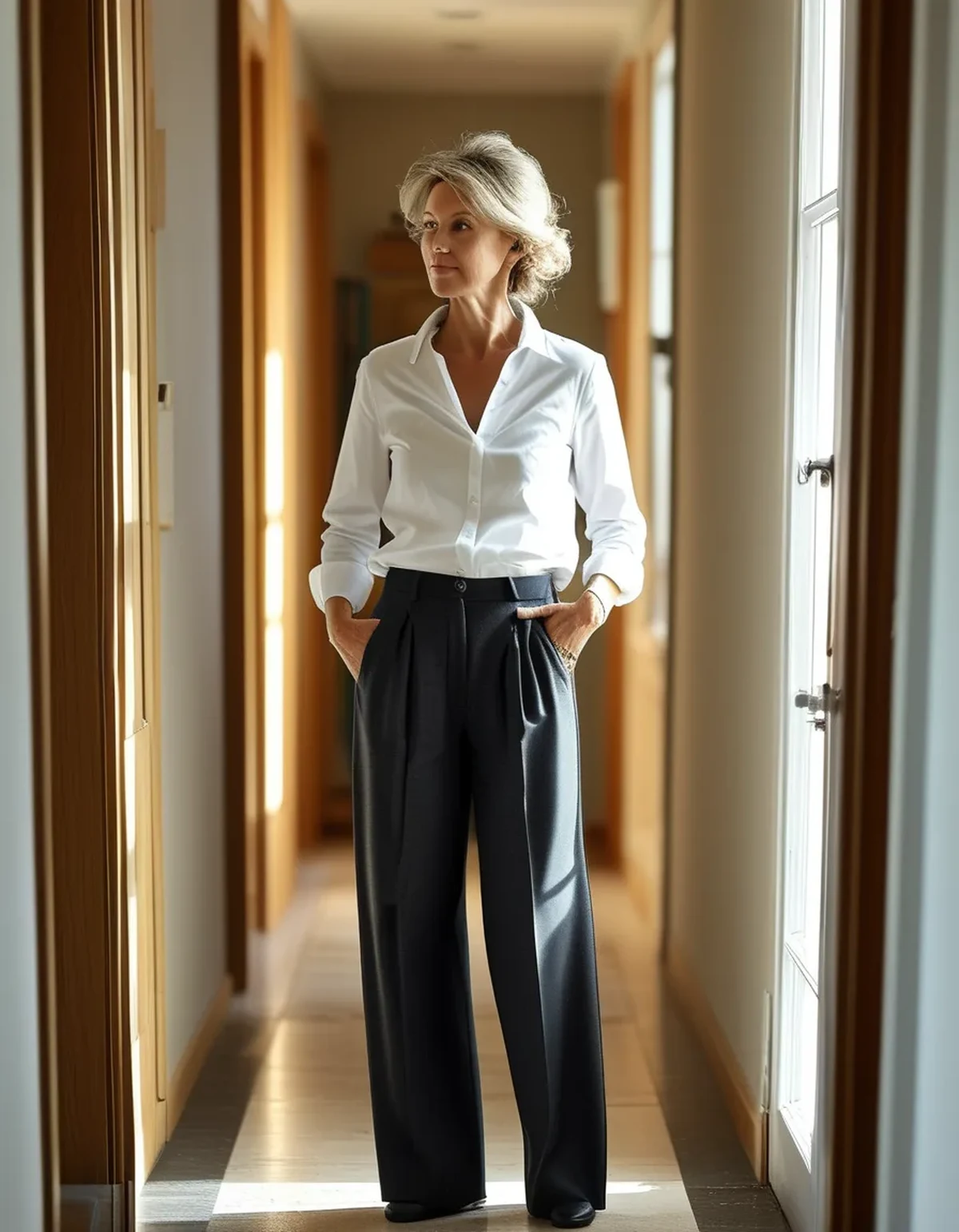
High-rise is usually right, but for a different reason. Not because higher is inherently better, but because a high rise on a tall frame gives the leg line the length it should have - and a mid-rise on a long torso can leave the whole outfit looking short-legged.
Semi-fitted beats both fitted and loose. A garment that skims the waist and falls from there gives shape without emphasis. Fully fitted highlights; fully loose erases.
Wide-leg trousers are the standout piece for this combination. Length to genuinely cover the shoe, a defined waist, heavier fabric. They read as intentional and elegant on a tall frame, and they are one of very few silhouettes that gets easier with height rather than harder.
And the hem length rule that still applies: trousers should reach the floor when you are in the shoes you will actually wear. A tall woman in trousers that end an inch short reads as ill-fitting, where the same gap on a shorter frame reads as cropped.
Myth vs Fact: Tall Style After Fifty
Myth: Tall women should avoid heels after fifty. Fact: Height is not a thing to apologise for at any age. The real consideration is comfort and stability, which favours a block heel or a low stacked heel over a stiletto - a footwear engineering point, not a proportion one.
Myth: You need tall sizing for everything. Fact: Tall ranges scale sleeves, inseams, and body together. Many tall women need length in only one or two dimensions, and buying a regular size with a longer body or a longer inseam separately is often a better fit than a tall size everywhere.
Myth: Long layers overwhelm you. Fact: Long coats and dusters are among the most flattering pieces available on a tall frame. The failure mode is a mid-length coat, which cuts the leg line at its widest point - not the long one.
Myth: Bright colours are for younger women. Fact: Colour placement is what changes, not colour itself. A saturated colour near the face works if the tone suits your colouring, and the tonal shift that comes with greying hair usually favours cooler or clearer versions rather than fewer colours.
Myth: Cropped trousers are a good compromise for tall women who cannot find length. Fact: They can work if the crop is decisive - at or above the narrowest part of the ankle - but a trouser that ends just above the shoe reads as accidental. If it must be short, make it obviously short.
FAQ: Tall Style Over Fifty Questions, Answered
Should I still avoid horizontal stripes?
No. Horizontal detail was discouraged to reduce apparent height, which is no longer the aim. A well-placed stripe on a tall frame reads as graphic rather than as widening.
What is the single best trouser shape?
Wide-leg in a heavier fabric, high-rise, long enough to reach the floor in your usual shoes. It suits a tall frame better than almost any other silhouette and it is comfortable enough to wear all day.
How do I find trousers long enough?
Shop by inseam measurement in centimetres, not by tall or regular labels, which vary enormously between brands. Keep your number written down and check it against product specifications rather than trying things on hopefully.
Do I need to hem everything?
Less than you would expect if you shop by measurement, but a good alterations tailor is the highest-value relationship in a tall woman’s wardrobe. Hemming a well-cut trouser costs a fraction of what an ill-fitting one costs in wear.
Is a belt still useful?
Only with fabric light enough to blouse over it. On the heavier fabrics that suit this stage, a defined seam or a wrap achieves the same shaping without adding bulk at the waist.
What should I buy first if I am rebuilding?
One pair of well-fitted heavier-fabric wide-leg trousers in a neutral, and a long coat. Those two pieces carry more outfits than any number of tops.
TL;DR:
- Stop breaking up your height - vertical continuity now reads as poise, and segmenting reads as busy.
- Go up in fabric weight, not up in size, when something clings or hangs badly; ponte, wool crepe, and heavier denim do the work.
- Re-find your waist with a ribbon test - the narrowest point often moves, and a rise that suited you at thirty-five may now sit below it.
- Long coats and wide-leg trousers are the standout pieces; mid-length coats are the ones that actually cut the line.
- Shop by inseam and sleeve measurement in centimetres, not by tall or regular labels.
The most freeing part is dropping the rule that was never really about style - the one that treated height as a thing to be minimised. It never was, and it is even less so now.
See It in Motion
Seen here: High Waist Drawstring Wide Leg Yoga Pants with Pockets — shop it on bubblelime.com
Keep Reading
This article is for general informational and styling purposes only. Fit, sizing, and product availability may vary.