How to Measure Yourself for Tall Activewear Before You Order Online
Quick Answer: Measure five things before ordering tall activewear: inseam from crotch to floor barefoot, rise from crotch seam to your natural waist, torso from shoulder to hip crease, underbust circumference, and shoulder-to-shoulder across the back. Compare them to the brand’s own chart rather than a generic one, because tall grading varies by 2 to 4 centimetres between brands. Five minutes with a tape saves an entire cycle of ordering, waiting, and returning.
After 45, the tall problem shifts. It is no longer just length — it is where the rise sits, whether the sports bra band stays put, and how sleeves behave once you layer. And almost nobody stocks tall ranges in a physical store, so you cannot try before you buy.

Which measurements actually matter for tall sizing?
Five, in this order of importance.
Inseam. Stand barefoot against a wall, feet together. Measure from the crotch to the floor. Most tall women land between 34 and 37 inches (86 to 94cm). Brands list legging inseams as a garment measurement, so match yours minus about 1 to 2 inches for a full-length fit that does not pool at the ankle.
Rise. From the crotch seam up to where you actually want the waistband to sit. This is the number that decides comfort, and it is the one nobody measures. A long torso needs a high rise not for style but for coverage.
Torso length. Shoulder point down to the hip crease. This tells you whether tank hems and sports bra bands will land where they should.
Underbust circumference. Snug, on an exhale. Sports bra bands ride up on long torsos, and the band is where the support lives.
Shoulder width. Across the back, bone to bone. Sleeve seams that sit inside this number restrict overhead reach every single time.
How do you measure your inseam without help?
The wall method is more accurate than measuring an existing pair.
Stand barefoot with your back flat against a wall and feet about hip-width apart. Place a hardcover book between your legs, spine up, and slide it firmly to your crotch. Keep it level. Mark the top edge of the book on the wall with a pencil, step away, and measure from the mark to the floor.
Do it twice and average the results. A one-centimetre error here becomes a visible ankle gap in a fitted legging.
Measuring an existing pair of leggings works only if that pair already fits perfectly, and if it does you probably do not need to measure. Lay them flat, smooth without stretching, and measure the crotch seam to the hem along the inside leg.
Write the number down somewhere permanent — a note on your phone. You will use it every time you shop for the next decade, and re-measuring every time is how errors creep in.
Why does the same tall size fit differently between brands?
Because there is no standard definition of tall.
One brand adds 2 inches to every length dimension. Another adds 3 inches to the inseam only, leaving the rise and torso unchanged — which is why some tall leggings are long enough but still sit low on your waist. A third grades tall as a separate block with its own fit model.
This is why generic charts fail. Always pull the brand’s own size chart from the specific product page, not the site-wide one, because tall ranges often have their own numbers that the general chart does not reflect.
When a chart lists garment measurements rather than body measurements, subtract for stretch. A compression legging with a 26-inch flat waist measurement will comfortably fit a 30-inch waist. When it lists body measurements, take them at face value.
If a product page lists neither, check the reviews for anyone who mentions their height and whether they sized up. That is not perfect data, but it beats guessing.
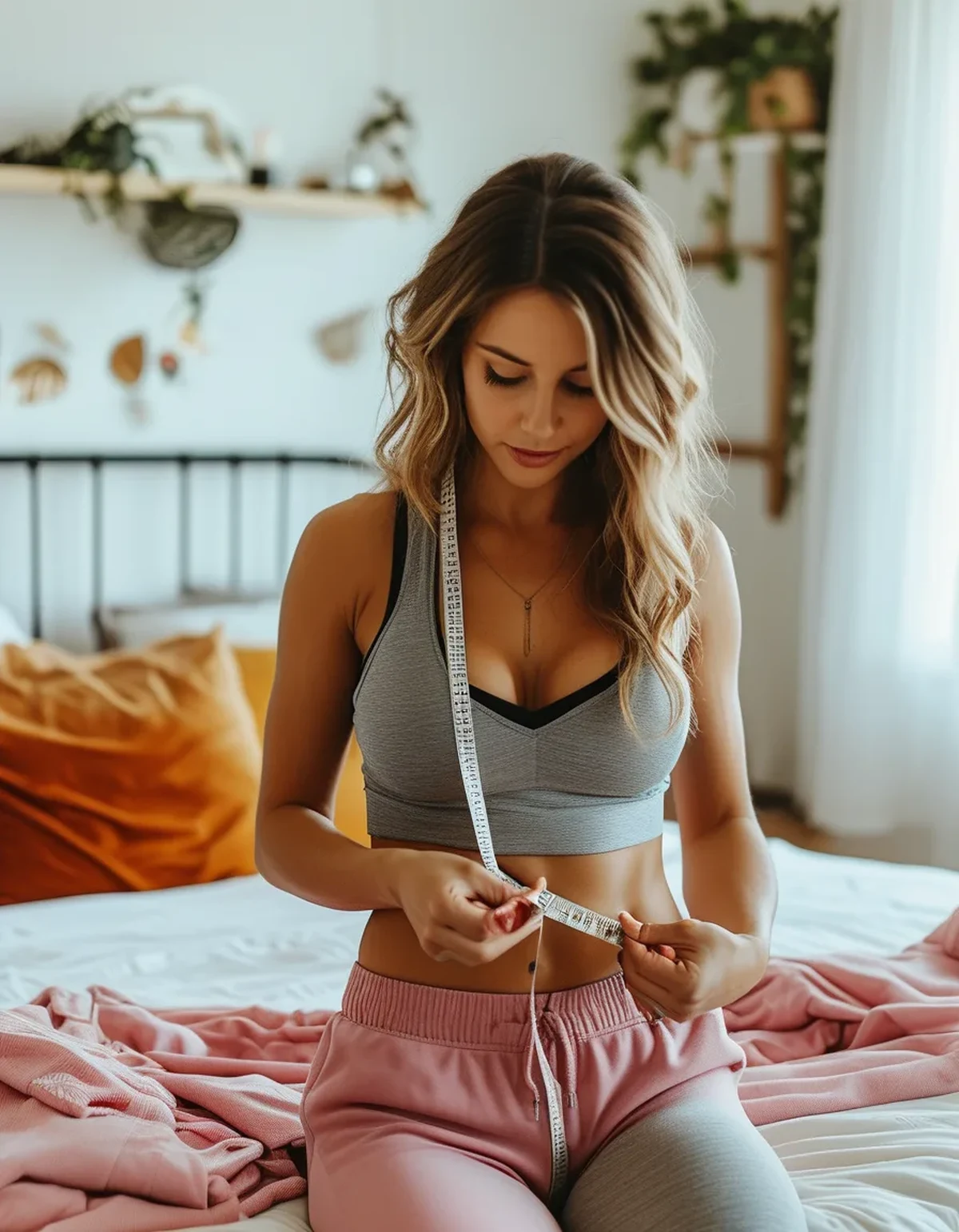
What Nobody Tells You About Tall Sizing After 45
Your measurements are not the ones you memorized in your thirties, and the changes are not the ones you expect.
Height itself drops slightly — spinal disc compression takes most women half an inch to a full inch between 40 and 60. That sounds trivial, but it comes off the torso, not the legs, which means your inseam stays the same while your rise requirement shrinks. A high rise that was perfect at 38 can sit uncomfortably high at 52.
Rib cage circumference tends to increase even when weight is stable, particularly after menopause. That is why sports bra bands that used to sit still now ride up: the band is fighting a slightly larger ribcage on the same long torso.
Shoulder posture shifts too. Years of desk work round the upper back a few degrees, which pulls sleeve length forward and makes tall sleeves suddenly feel short at the wrist when you reach.
The practical takeaway: re-measure every two years, not once a decade. Most tall women are shopping against numbers that are five or ten years out of date and blaming brands for a chart problem that is partly their own tape measure.
How do you handle returns strategically?
Order in pairs, not singles, and treat the first order as a fit test.
When you find a brand whose tall range might work, order the same style in two adjacent sizes at once. Yes, it ties up money for a week. It also collapses three shopping cycles into one, and for tall ranges that go out of stock quickly, it may be your only shot at the right size.
Try everything on the same day the box arrives, over the underwear you would actually wear, and do the movement test — squat, lunge, overhead reach, and a full minute of sitting. Return windows are short and the pile grows fast.
Keep a running note of what worked: brand, style, size, and the specific reason. Six months later when you want a second pair, that note is worth more than any review section.
And check whether the retailer offers free returns before ordering two. Paid returns turn the pair strategy from smart into expensive.
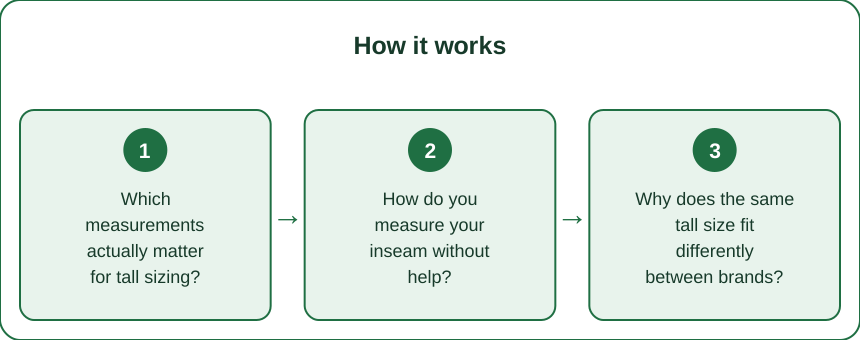
FAQ: Tall Measurement Questions, Answered
Should I measure in the morning or evening?
Evening, if you can only do it once. Spinal compression over the day means your height and torso measurements are slightly smaller by evening, and that is closer to how you will be shaped during an afternoon or evening workout.
Do I need a tailor’s tape or will a hardware tape work?
Use a soft tailor’s tape — a metal hardware tape cannot follow body curves and will read short on circumference measurements. If you only have hardware tape, use a piece of string and then measure the string.
Is tall sizing worth the price premium?
Usually yes, once you factor in what you actually wear. A tall legging you reach for three times a week costs less per wear than two regular pairs sitting unworn because they end mid-calf. The premium is typically 10 to 20 percent, which one season of real use erases.
TL;DR:
- Five measurements matter: inseam, rise, torso length, underbust, and shoulder width — in that order.
- Use the wall-and-book method for inseam and average two attempts; small errors show up as ankle gaps.
- Always use the brand’s product-page chart, since tall grading differs by 2 to 4cm between labels.
- Re-measure every two years after 45 — torso length and rib circumference change even when weight does not.
Tall shopping online is not a gamble if you have real numbers. Spend five minutes with a tape this week and the next order stops being a coin flip.
See It in Motion
Seen here: Racerback Tank Top - White — shop similar styles on bubblelime.com
Keep Reading
This article is for general informational and styling purposes only. Fit, sizing, and product availability may vary.