What Changes in Activewear Needs for Tall Women After 40
Quick Answer: After 40, tall women often need more from activewear in three specific areas — joint-supportive fabric compression, wider recovery-friendly waistbands, and longer inseams that still account for a slightly different natural gait — on top of the length needs they’ve always had.
The length problem doesn’t go away after 40. But it’s joined by new priorities that the ‘just find long enough inseams’ advice from your 20s and 30s doesn’t cover.
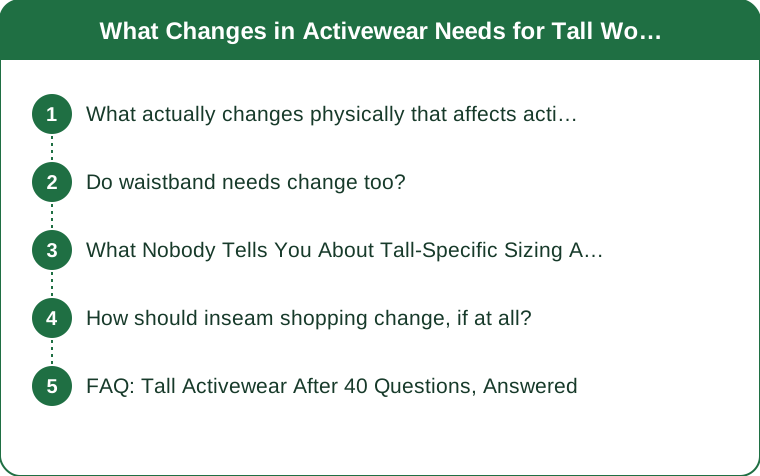
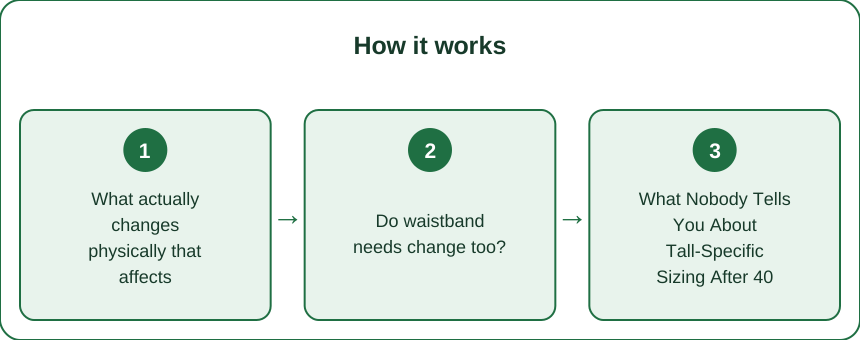
What actually changes physically that affects activewear fit?
Joint support and recovery needs shift gradually starting in the 40s for most people — not dramatically, but enough that a very thin, purely-for-length legging fabric can feel less supportive during and after a workout than it used to.
Moderate compression (not maximum, which can restrict circulation during longer sessions) in the knee and calf area is worth prioritizing over pure length-focused shopping alone.
Do waistband needs change too?
Often yes — a wider, softer waistband that doesn’t dig during longer walks or seated recovery stretches tends to matter more than it did in your 20s, when a thin, minimal band felt fine for shorter, higher-intensity sessions.
This isn’t about size — it’s about band width and structure. A 3-4 inch high-rise band with soft recovery-friendly material solves comfort issues that a narrower band, even in the correct length, doesn’t.

What Nobody Tells You About Tall-Specific Sizing After 40
Most ‘tall’ activewear lines are still designed and tested on a younger sample body, meaning the length is right but the support features are calibrated for a different priority set — max compression for performance, minimal fabric for aesthetics.
The useful move: look specifically for brands that intersect tall sizing with recovery or joint-support features (some running and studio brands do this explicitly), rather than assuming any ‘tall’ label automatically covers your actual needs at this stage.
How should inseam shopping change, if at all?
The core measurement approach stays the same — measure your actual inseam, don’t guess from height alone. What’s worth adding: check the fabric’s recovery/compression rating, not just the length, since two leggings can share an identical inseam and differ meaningfully in joint support.
A slightly looser knee cut (not baggy, just not overly tight) can also feel more comfortable for some people at this stage, since less restriction around the kneecap can reduce irritation during longer walks or hikes.
FAQ: Tall Activewear After 40 Questions, Answered
Is compression fabric actually better for joint support?
Moderate graduated compression can help with swelling and a feeling of support during activity, though it’s not a substitute for addressing actual joint pain with a professional if it’s persistent.
Should tall women over 40 size up for comfort?
Size by your measurements, not by assumption — sizing up to fix a support or comfort issue often just adds excess fabric without solving the underlying band-width or compression need.
Do recovery leggings work well for tall frames?
Yes, and increasingly more brands offer both tall sizing and recovery-focused compression together — worth specifically searching for that combination rather than treating them as separate shopping trips.
TL;DR:
- Length needs don’t disappear after 40, but support needs join them
- Moderate compression and wider, softer waistbands matter more than in your 20s
- Most ‘tall’ lines are still designed around younger, performance-first priorities
- Look for brands intersecting tall sizing with recovery/joint-support features specifically
Keep measuring for length, but start shopping for support features too — the priorities genuinely shift, not just the numbers.
See It in Motion
Seen here: High Waist Yoga Leggings with Inner Pocket — shop it on bubblelime.com
Keep Reading
This article is for general informational and styling purposes only. Fit, sizing, and product availability may vary.