Why Getting Inseam Length Exactly Right Becomes More Important After 40
Quick Answer: Body proportions and posture can shift subtly with age, and skin and joint sensitivity to friction or pressure often increases, meaning an inseam that was ‘close enough’ at 30 may now cause real chafing or bunching at the knee — precise, not approximate, sizing matters more for comfort as these small physical changes accumulate.
The same ‘pretty close’ inseam fit that worked fine years ago may now cause real discomfort, and it’s not just in your head.
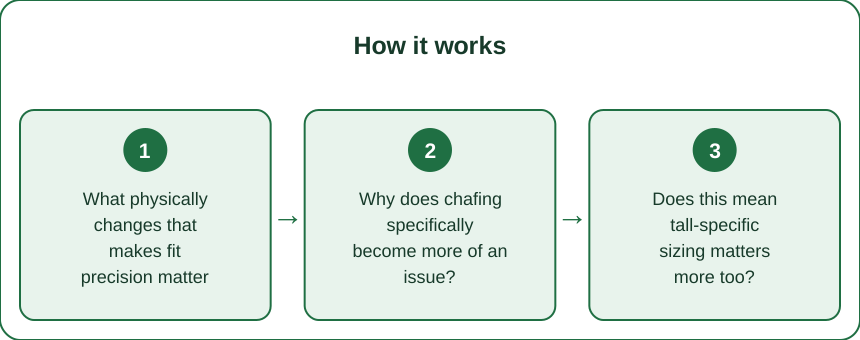
What physically changes that makes fit precision matter more?
Subtle shifts in posture, joint position, and skin sensitivity can occur gradually with age, meaning small proportion mismatches that were previously unnoticeable — an inseam an inch too short or too long — become more noticeable as friction points, especially around the knee during movement.
Why does chafing specifically become more of an issue?
Skin can become thinner and slightly less resilient with age, making it more prone to irritation from repeated fabric friction that a younger, more resilient skin barrier tolerated without issue at the same fit tolerance.
Does this mean tall-specific sizing matters more too?
Yes — generic ‘tall’ sizing that’s only roughly extended from standard sizing (rather than proportionally redesigned) is more likely to create the exact awkward bunch-at-the-knee or ride-up problems that now cause noticeable discomfort, versus true tall-specific cuts.
What’s the practical fix beyond just buying ‘tall’ sized items?
Checking specific inseam measurements against your own actual leg length, rather than relying on a size label alone, and prioritizing brands with garment measurements listed (not just size charts) gives a more reliable fit match than sizing by label.
FAQ: Inseam Fit for Tall Women Over 40, Answered
Should I size up if between two inseam lengths?
Generally the longer option is safer for tall frames, since too-short creates more friction issues than slightly too long, which can usually be hemmed.
Does fabric type affect how much inseam precision matters?
Yes — stiffer or less stretchy fabrics show fit mismatches more than fabrics with more give, which can accommodate small length differences more comfortably.
Is this fit sensitivity permanent once it starts, or does it fluctuate?
It can fluctuate somewhat with factors like hydration and activity level, but the general trend of increased sensitivity with age tends to persist rather than reverse.
TL;DR:
- Subtle posture and skin sensitivity shifts with age make small fit mismatches more noticeable
- Thinner, less resilient skin is more prone to friction irritation at the same fit tolerance
- Generic tall sizing extensions cause more fit problems than true tall-specific cuts
- Checking actual garment measurements against your leg length beats relying on size labels
Keep Reading
This article is for general informational and styling purposes only. Fit, sizing, and product availability may vary.