Why Shoulder Fit Becomes the Real Challenge for Tall Women After 40
Quick Answer: Postural and soft tissue changes common after 40 — including shifts in shoulder posture and upper body composition — mean a shoulder width that fit comfortably at 30 can feel tight, restrictive, or oddly positioned at 45, even without significant weight change.
You’ve solved the inseam problem years ago — tall-specific brands, longer cuts, no more ankle-baring leggings. Then suddenly it’s shoulders and armholes causing the fit frustration instead.

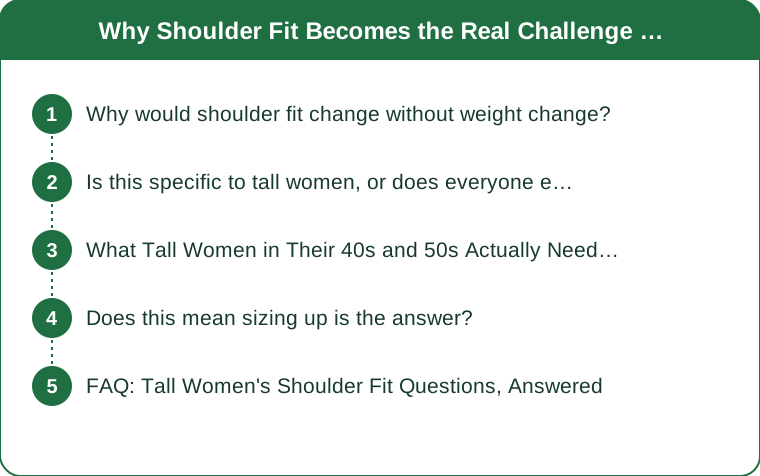
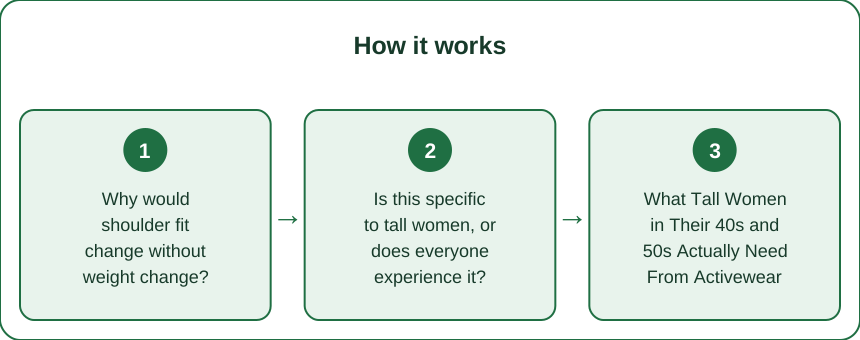
Why would shoulder fit change without weight change?
Postural shifts — often related to years of desk work, changes in bone density, or muscle mass redistribution — can subtly change shoulder position and upper back width over time. Tall frames, which already carry proportionally broader shoulder spans in many size charts, can find that a previously fine shoulder seam now sits in a slightly different, less comfortable spot.
Is this specific to tall women, or does everyone experience it?
The postural and composition shifts happen broadly with age, but tall women often notice it more acutely because shoulder seams and armholes were already a tighter fit margin to begin with — tall-specific clothing typically extends torso and inseam length without proportionally adjusting shoulder width, leaving less room to absorb this natural shift.

What Tall Women in Their 40s and 50s Actually Need From Activewear
Beyond length, look specifically for raglan sleeves or drop-shoulder cuts, which are more forgiving of shifting shoulder position than a fitted set-in sleeve. Stretch fabric across the upper back and shoulder seams (not just at the waist and hips) also accommodates natural movement changes better than a rigid woven fabric would.
Does this mean sizing up is the answer?
Not necessarily — sizing up for shoulder room often creates excess fabric elsewhere (waist, sleeve length) that a tall frame doesn’t need. A better approach is seeking out brands that specifically cut for broader shoulder allowance within their tall size range, or prioritizing stretch-forward fabrics over rigid ones.
FAQ: Tall Women’s Shoulder Fit Questions, Answered
Why does inseam length matter more after 40 too?
Similar postural and comfort priorities shift — a previously acceptable slightly-short inseam becomes more noticeable and less comfortable as joint sensitivity and general comfort preferences change with age.
Should I look for different brands than I used in my 30s?
Possibly — brands with generous stretch and raglan or dropped-shoulder cuts specifically may serve you better now than the fitted, structured pieces that worked a decade ago.
Is shoulder fit tightness a health concern or just a comfort issue?
Generally a comfort and fit issue, not typically a health concern — but if tightness comes with numbness or pain, that’s worth mentioning to a doctor separate from the styling question.
TL;DR:
- Postural and composition shifts after 40 can change shoulder fit without weight change
- Tall frames feel this more because shoulder margin was already tighter to begin with
- Raglan/drop-shoulder cuts and broader stretch fabric accommodate the shift better
- Sizing up isn’t the fix — look for tall-specific cuts with genuine shoulder allowance
The fit challenge just moved from your ankles to your shoulders — the solution is the same principle: find the cut built for your actual proportions.
Keep Reading
This article is for general informational and styling purposes only. Fit, sizing, and product availability may vary.