Why Tall Women's Activewear Sizing Gets Harder to Find After 40 — Not Easier
Quick Answer: Body proportion shifts common after 40 — changes in waist definition, hip position, and skin elasticity — interact with tall-specific sizing gaps (limited inseam options, proportions built for a younger average frame) to create a narrower usable range than either factor alone would predict. Brands with adjustable rise and true tall-specific inseams help most.
You’ve navigated tall sizing for two decades. Suddenly, in your 40s and 50s, the same brands that used to fit reliably start missing in new ways. This isn’t inconsistency on your part — it’s two separate sizing problems compounding.
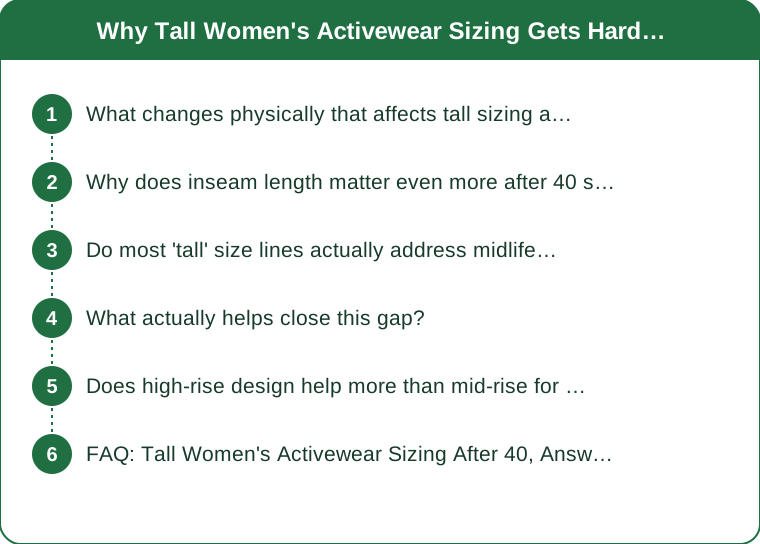
What changes physically that affects tall sizing after 40?
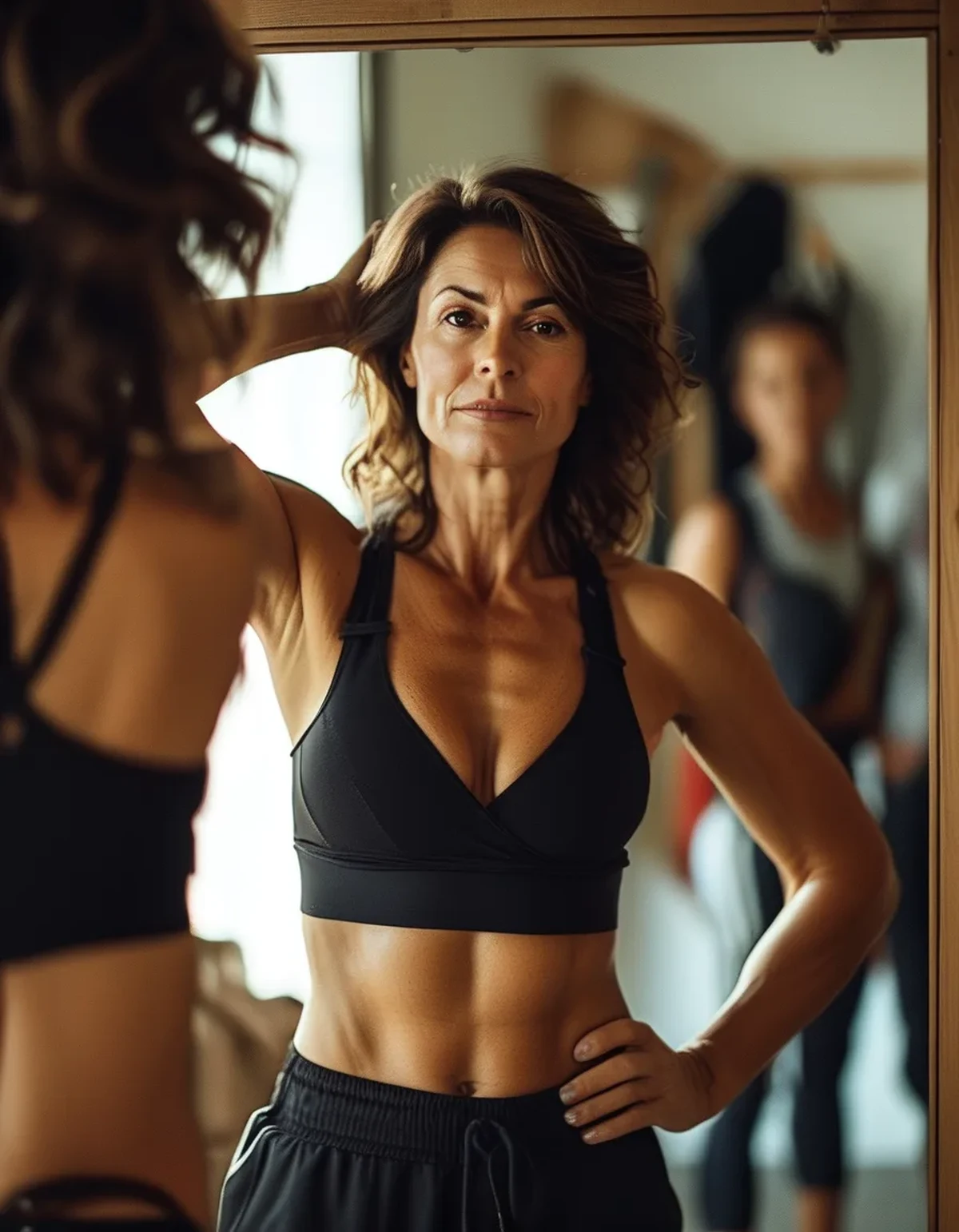
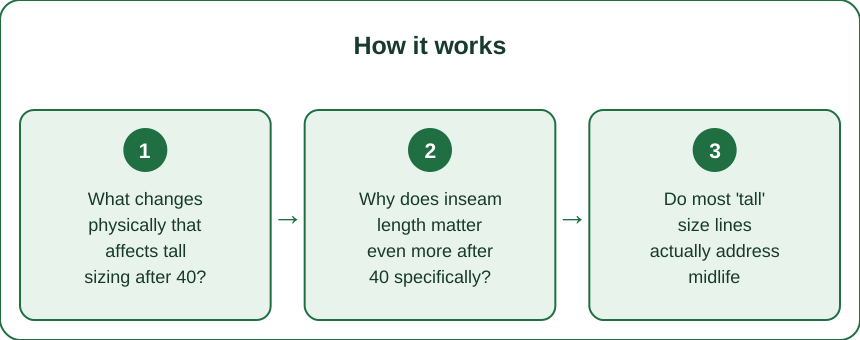
Waist definition often softens, and fat distribution can shift toward the midsection, which changes how a garment cut for a younger average frame sits on a tall body. Tall-specific sizing was often designed primarily around inseam length, with less attention to how torso and waist proportion shift with age — so the length problem tall women have always faced now compounds with a proportion problem that wasn’t accounted for in most tall-line designs.
Why does inseam length matter even more after 40 specifically?
Because a too-short inseam interacts badly with changing knee and ankle sensitivity that’s more common with age — a legging or pant that bunches or rides up at the wrong point isn’t just an aesthetic annoyance after 40, it can create real irritation or discomfort during movement. Getting inseam length genuinely right becomes a comfort issue, not just a style preference, as skin and joint sensitivity shift.
Do most ‘tall’ size lines actually address midlife proportion changes?
Not consistently. Most tall-specific activewear lines were designed primarily to add length, not to adjust for waist or torso proportion changes — meaning a tall-specific pant might solve the length problem while still missing on rise or waist fit for a body that’s changed since the line’s core measurements were established. This is a real gap in the market, not something you’re doing wrong in how you shop.
What actually helps close this gap?
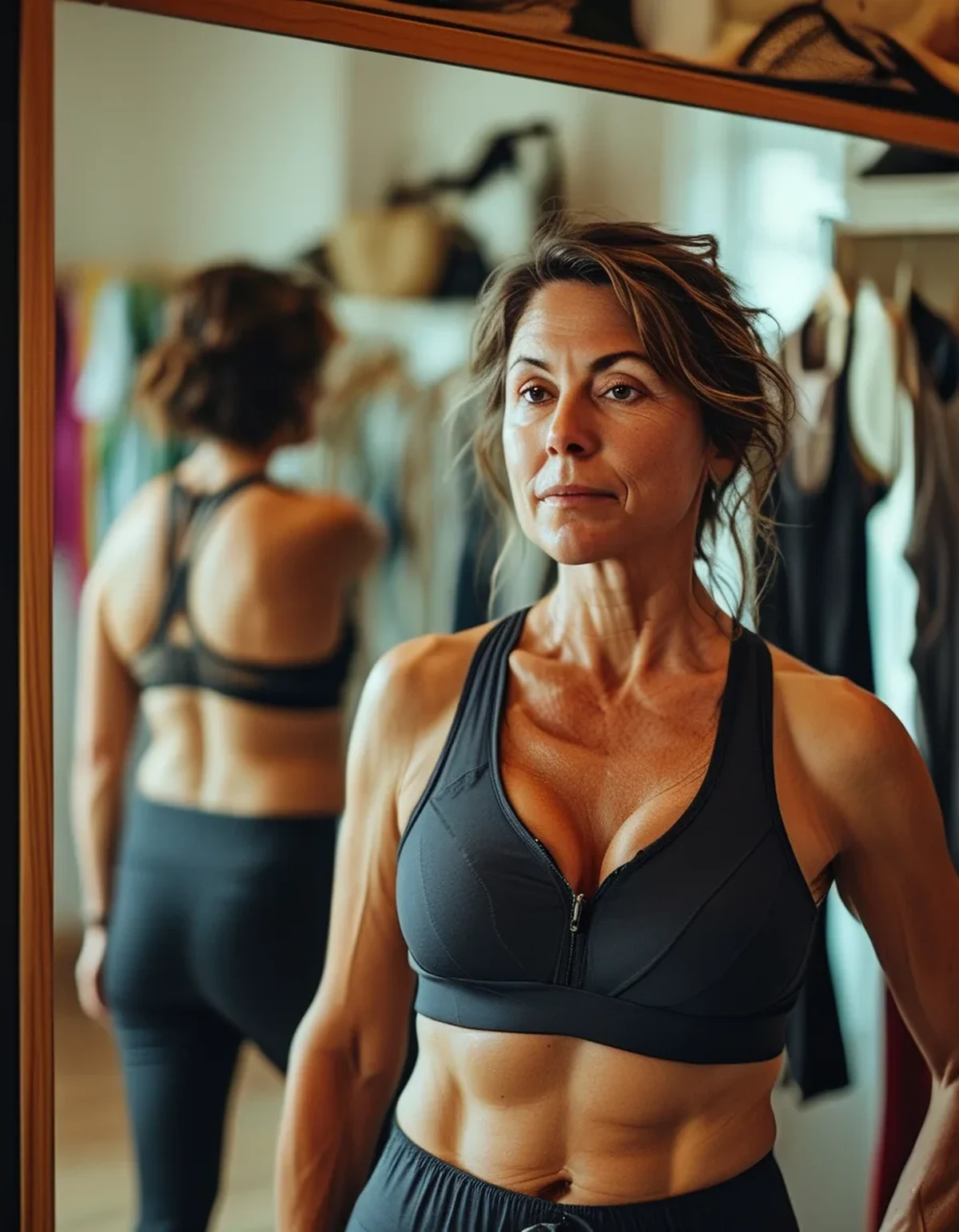
Brands offering adjustable or drawstring waists within their tall-specific lines, rather than a single fixed rise, tend to accommodate this shift better than standard fixed-waist tall pants. Looking specifically for tall lines that mention ‘adjustable waist’ or multiple rise options, rather than just ‘extra length,’ targets the actual compounding problem rather than just the length half of it.
Does high-rise design help more than mid-rise for this specific issue?
Generally yes — a higher rise that sits above where waist definition has softened provides more consistent grip and coverage than a mid-rise cut, which is more likely to sit right at the point where midsection changes have occurred and provide less reliable fit. This mirrors general high-rise fit advice but matters more specifically for tall women navigating both the length and proportion issue simultaneously.
FAQ: Tall Women’s Activewear Sizing After 40, Answered
Should tall women over 40 size up from their usual tall size?
Not automatically — the issue is more often rise and waist design than overall size, so trying an adjustable-waist option in your usual size first is generally a better first step than sizing up.
Are there brands specifically designing for tall women over 40?
A growing number of brands are adding adjustable-rise options within tall lines, though this remains a smaller segment of the tall activewear market overall.
Does tailoring help more than buying a different size?
Often yes, particularly for waist and rise adjustments, which are harder to solve by sizing alone — a tailor adjusting the waist of a correctly-inseamed tall pant can solve a fit problem that swapping sizes wouldn’t.
TL;DR:
- Waist and torso proportion changes after 40 compound with the pre-existing tall-sizing length gap
- Most tall lines were designed to fix length, not adjust for waist proportion shifts
- Adjustable or drawstring waists within tall lines address this better than fixed-rise cuts
- Higher rise generally fits more consistently than mid-rise for this specific combination of issues
It’s not you being harder to fit — it’s two separate sizing gaps overlapping that most tall lines weren’t built to solve together.
Keep Reading
This article is for general informational and styling purposes only. Fit, sizing, and product availability may vary.