Why the Rise - Not the Inseam - Decides If Tall Leggings Work After 40
Quick Answer: Inseam determines where leggings end. Rise determines whether they stay put. Tall bodies typically carry extra length in the torso as well as the leg, so a legging labeled high-rise sits at true mid-rise on you - and a mid-rise waistband lands exactly where the waist is softest after 40, which is why it rolls, digs, and slides. Look for a rise of 11-13 inches on tall sizing, not just a longer inseam.
Most tall-specific lines extend the leg and leave the rise alone. That is the whole problem in one sentence.
And it is why the leggings that fit you at 32 stopped working at 45 without changing size.
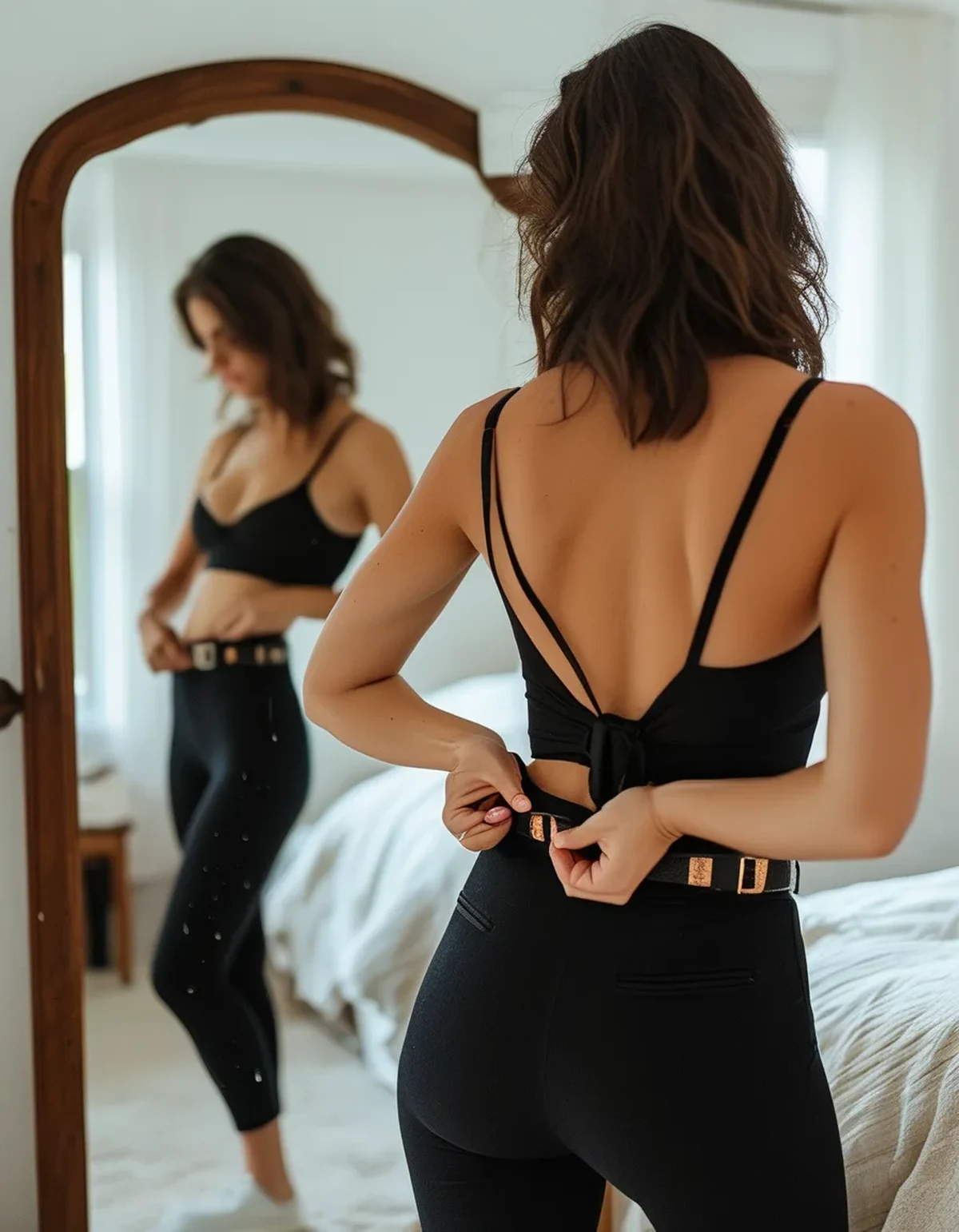
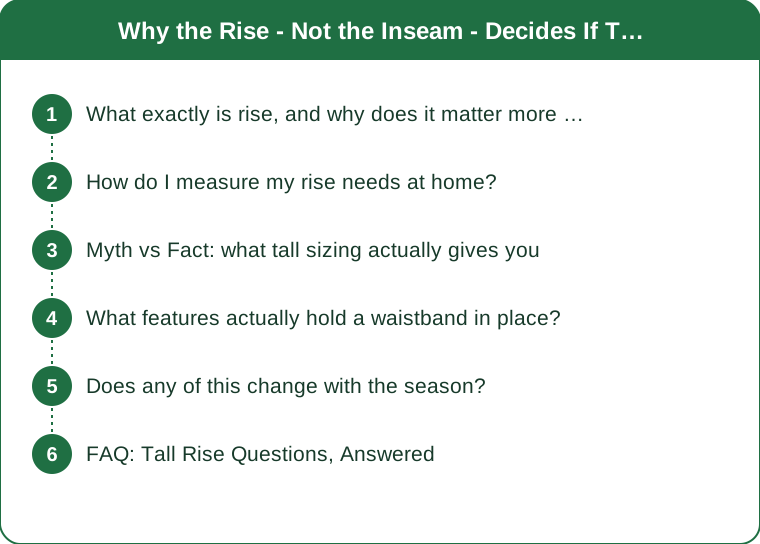
What exactly is rise, and why does it matter more after 40?
Rise is the distance from the crotch seam to the top of the waistband. It decides where the waistband sits on your torso.
Two things shift after 40 and they compound:
Torso proportion stays the same, but soft tissue redistributes. Perimenopausal hormonal change tends to move fat storage toward the midsection. A waistband that used to sit on a flat plane now sits on a curve.
Skin and connective tissue lose some elastic recoil. Which means a band that used to grip smooth skin now has slightly more give underneath it.
On a tall frame, a standard 10-inch rise was already sitting low. Add the above and it lands right at the widest, softest point - the exact spot where a waistband either folds down or cuts in. A higher rise clears that zone and anchors against the ribcage instead.
How do I measure my rise needs at home?
Ten minutes, a soft tape, and a legging you already own.
Step 1 - find where you want the band. Stand relaxed and place a hand where a waistband feels most secure. For most tall women over 40 this is at or just above the navel.
Step 2 - measure your body rise. Sit on a hard chair, run the tape from the chair surface up the side of your body to that point. Add about an inch for the waistband to sit above rather than at that line.
Step 3 - measure a legging you own. Lay it flat, measure from the crotch seam straight up the front to the top edge. Compare.
Most tall women find they need 11.5-13 inches where the market defaults to 9-10.5. That two- to three-inch gap explains a decade of frustration.
Write both numbers on your phone. Every product page lists rise somewhere in the spec table, and now you can filter instantly.
Myth vs Fact: what tall sizing actually gives you
Myth: Tall sizing means everything is scaled up. Fact: most tall lines extend the inseam only. Rise, torso length, armhole depth, and knee-seam placement often stay identical to regular. You are getting one adjusted measurement out of four.
Myth: A rolling waistband means the leggings are too big. Fact: rolling is usually a rise problem, not a size problem. Sizing down tightens the band without moving it, which makes the digging worse and the rolling identical.
Myth: High-rise is a trend that will pass. Fact: for tall proportions it is a fit requirement, not a style choice. When the market swings back to mid-rise, tall women are the first to notice.
Myth: A drawstring solves it. Fact: a drawstring controls circumference. It cannot change where the band sits.
Myth: You should size up for length. Fact: sizing up adds circumference everywhere and adds only a fraction of an inch of rise. It is the least efficient trade in the fitting room.
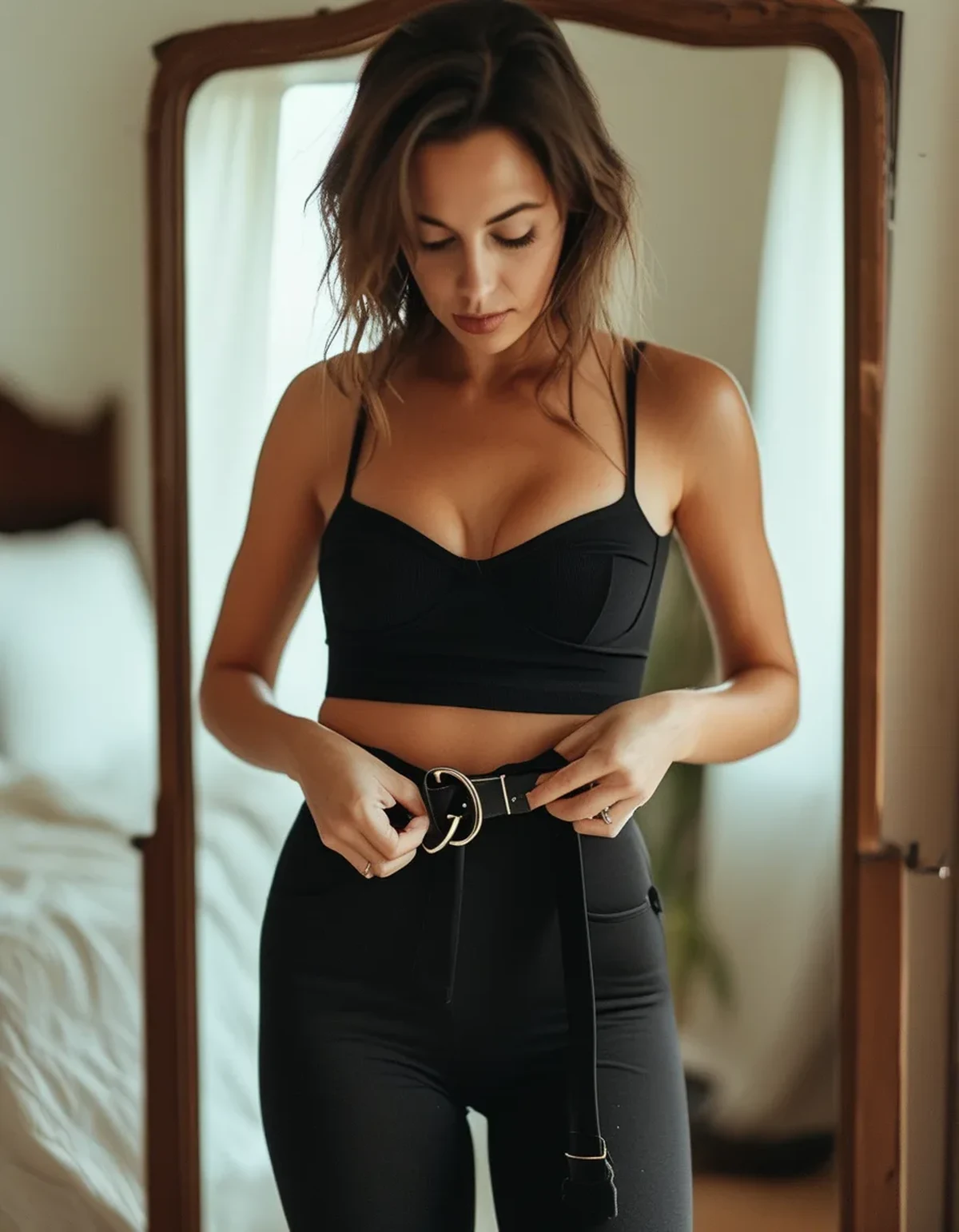
What features actually hold a waistband in place?
In rough order of how much difference they make:
- A wide band, 4 inches or more. Wide bands distribute pressure over more surface area, so they grip without a single digging line. Narrow bands concentrate force and fold.
- A contoured or V-shaped front. A band cut slightly higher at the sides and shaped at the center front follows the body’s actual curve instead of fighting it.
- Internal elastic or a drawcord inside the band. Adds hold without a visible seam.
- Higher elastane content in the band than the leg. Check whether the brand lists band composition separately - the good ones do.
- A gusset. Not a waistband feature, but a gusseted crotch keeps the whole garment tracking straight, which stops the rise from being pulled down on one side.
What does not help: silicone grippers on the waistband. They stop slipping against skin but do nothing about rolling, which is the fabric folding over itself.
Does any of this change with the season?
It does, and late summer into fall is when tall women notice most.
Layering changes the pressure at the waist. A longer top, a tucked layer, or a jacket hem all sit at the same place the waistband does. A higher rise clears the pile-up; a mid-rise gets pushed down by it.
Full-length leggings come back into rotation. The 7/8 crops that dominate summer hide inseam problems - on a tall frame a 7/8 reads as a normal ankle length, which is why summer feels easier. Fall means full-length, and both measurements have to be right.
Cooler weather means thicker fabric. Heavier knits have less stretch recovery in the band, so a marginal rise becomes an unacceptable one around October.
If you are buying for fall, buy the rise now. It is the measurement that will not be fixable later.
FAQ: Tall Rise Questions, Answered
Can a tailor lengthen the rise on leggings?
Realistically, no. Rise is structural to the pattern. A tailor can shorten a hem or take in a side seam, but adding rise means rebuilding the garment.
Is there a rise that is too high?
Yes - a band that sits above the natural waist and up onto the ribs restricts breathing during hard effort and tends to slide down over a workout. Just above the navel is the ceiling for most people.
Why do the same leggings fit differently sitting versus standing?
Sitting shortens your effective rise by an inch or more as the torso compresses. Always test the fit seated, not just standing in front of the mirror - that is where a marginal rise gives itself away.
TL;DR:
- Rise decides whether leggings stay put; inseam only decides where they end.
- Tall women over 40 usually need 11.5-13 inches of rise - most tall lines only extend the inseam.
- Measure once (chair to waist, plus an inch) and filter every product page by that number.
- Wide contoured bands beat grippers. Rolling is a rise problem, not a size problem.
- Test the fit sitting down, and buy your fall full-length pairs on rise first.
The irritating part is that this was always true - it just did not announce itself until the midsection changed. Once you have your rise number, tall shopping gets dramatically less random.
See It in Motion
Seen here: High Waist Yoga Leggings with Inner Pocket — shop it on bubblelime.com
Keep Reading
This article is for general informational and styling purposes only. Fit, sizing, and product availability may vary.